Solving Shopify CORS Errors with App Proxy and Secure PHP API Integration
Overview
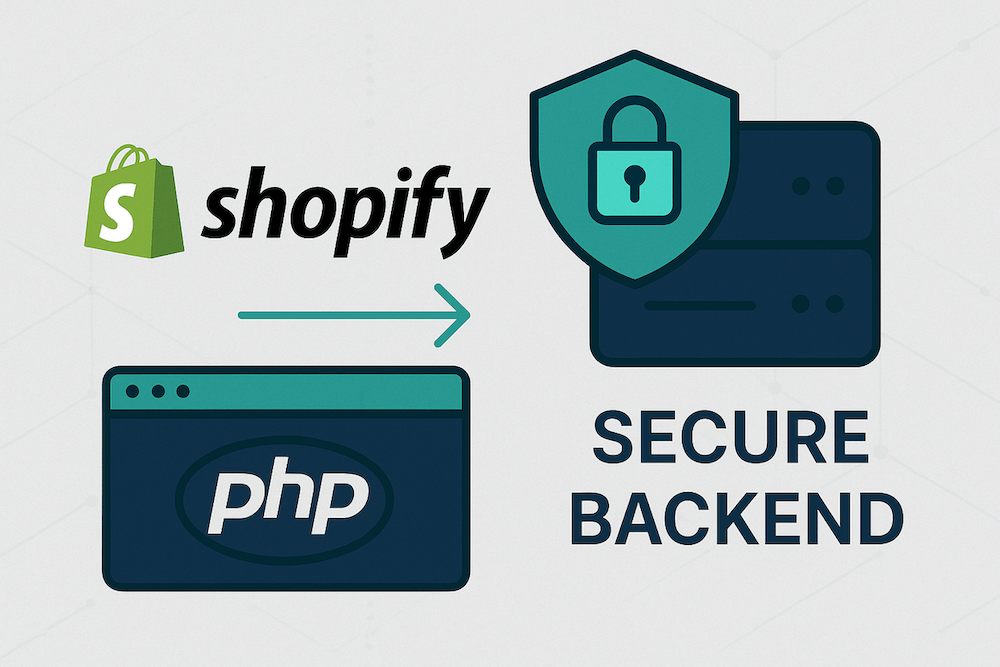
A merchant operating multiple Shopify storefronts needed a reliable way to validate customer emails before activating accounts. They were using a custom PHP script triggered from a Shopify theme, but recent security changes by Shopify caused the solution to break. I was brought in to rebuild the integration using a secure and scalable approach that works across stores—without exposing sensitive data or depending on deprecated methods.
The Challenge
The original system relied on client-side JavaScript calling a remote PHP script using fetch(). This script queried Shopify’s Admin API to check if a customer existed, but it broke due to:
- CORS errors: Shopify's frontend environment blocked the cross-origin requests.
- Security risks: Shopify tokens were passed via custom headers, visible in browser dev tools.
- Lack of multi-store support: The script couldn’t dynamically route requests to the right store’s API token.
This created friction for new customers trying to activate their accounts and posed a security liability for the merchant.
Solution Design
To rebuild the system, I leveraged Shopify’s built-in App Proxy mechanism, which allows authenticated server-side routing of theme-based requests to a secure external endpoint. This method:
- Prevents CORS errors by avoiding browser-based cross-origin calls.
- Hides sensitive tokens from the frontend.
- Scales easily across multiple Shopify stores.
I also rewrote both the frontend and backend logic to improve robustness and maintainability.
Key Updates
- Registered an App Proxy that routes storefront requests to
https://api.example.com/shopify/customer-activate.php. - Modified frontend logic: Created a new
getCustomerData()JavaScript function that sends POST requests with the customer’s email securely in the body. - Removed insecure headers: Eliminated the use of custom HTTP headers that exposed tokens.
- Enhanced PHP script:
- Accepts JSON input.
- Detects which store made the request using a
Shopify-Siteheader. - Matches the correct API token dynamically.
- Improved error handling and made it compatible with PHP 7.2.
Technical Highlights
- Secure server-side routing through Shopify App Proxy.
- Theme code isolation using a dedicated function for activation logic in
account-activation.liquid. - Improved server compatibility by rewriting parts of the legacy PHP code.
- Multi-store detection and token assignment based on request headers.
Tech Stack
| Component | Purpose |
|---|---|
| Shopify (Liquid, Admin API) | Shopify integration |
| PHP 7.2+ | Backend scripting |
| REST APIs | API communication |
| JavaScript (Fetch API) | Frontend logic |
| Remote Hosting (e.g., api.example.com) | Hosting |
Results
- CORS issues resolved: The system now works natively within Shopify themes.
- Sensitive data protected: Tokens and internal logic are hidden from the public.
- Multi-store support enabled: The system handles customer activation from multiple Shopify stores seamlessly.
- Better customer experience: Error handling improvements give users clear feedback when activation fails.
Why It Matters to eCommerce Managers
For eCommerce managers, especially those managing wholesale workflows or multi-brand Shopify instances, this case is a reminder of how platform-level security updates can disrupt key flows.
By rebuilding this activation system to use secure, Shopify-approved methods:
- Customer onboarding became seamless again
- Technical debt was eliminated
- Maintenance overhead was reduced
And most importantly, customer trust and operational continuity were preserved.
Reviews
Product Page Updates

Eric is great! So responsive and did exactly what we wanted within 24 hours. We'll definitely be working with him again.
Theme updates: Product & Collection Pages
Eric was responsive and understood the assignment! Great experience.
Bundle Page Development
Eric was fantastic. He did a thorough job making sure we had what we needed, I will definitely be using him again.